Car insurance in Israel: theft and glass breakage, fact vs fiction
Stolen car or cracked windscreen in Israel: does your mekif policy really cover everything? What is standard and what is not.
In Israel, compulsory insurance (chova) covers only bodily injury caused to third parties: it never reimburses the theft of your car or a cracked windscreen. Only a mekif policy, the local equivalent of "comprehensive", can cover these situations, and even then you need to look closely at what it really includes, because theft and glass breakage are not treated in the same way by insurers.
Theft: cover that is in principle included, with conditions
In a standard mekif policy, theft of the vehicle is generally part of the basic cover, along with fire, water damage, natural disasters and acts of vandalism. The cover in principle also extends to damage caused by an attempted theft, such as a forced window or lock, even if the thief did not finally manage to take the vehicle.
That said, this cover is not unconditional. Israeli insurers assess the risk of theft according to the vehicle model, with some models statistically more sought after by thieves, but also its colour, its value and the security equipment installed. An alarm is generally considered standard protection equipment, and fitting a GPS tracker to locate the vehicle is seen as a significant risk reduction, which can make it easier to have your file accepted or influence the terms offered. For a valuable vehicle or a model known to be vulnerable to theft, it is not unusual for an insurer to ask for a geolocation device in addition to the alarm before granting full cover.
Glass breakage: the false certainty of "comprehensive"
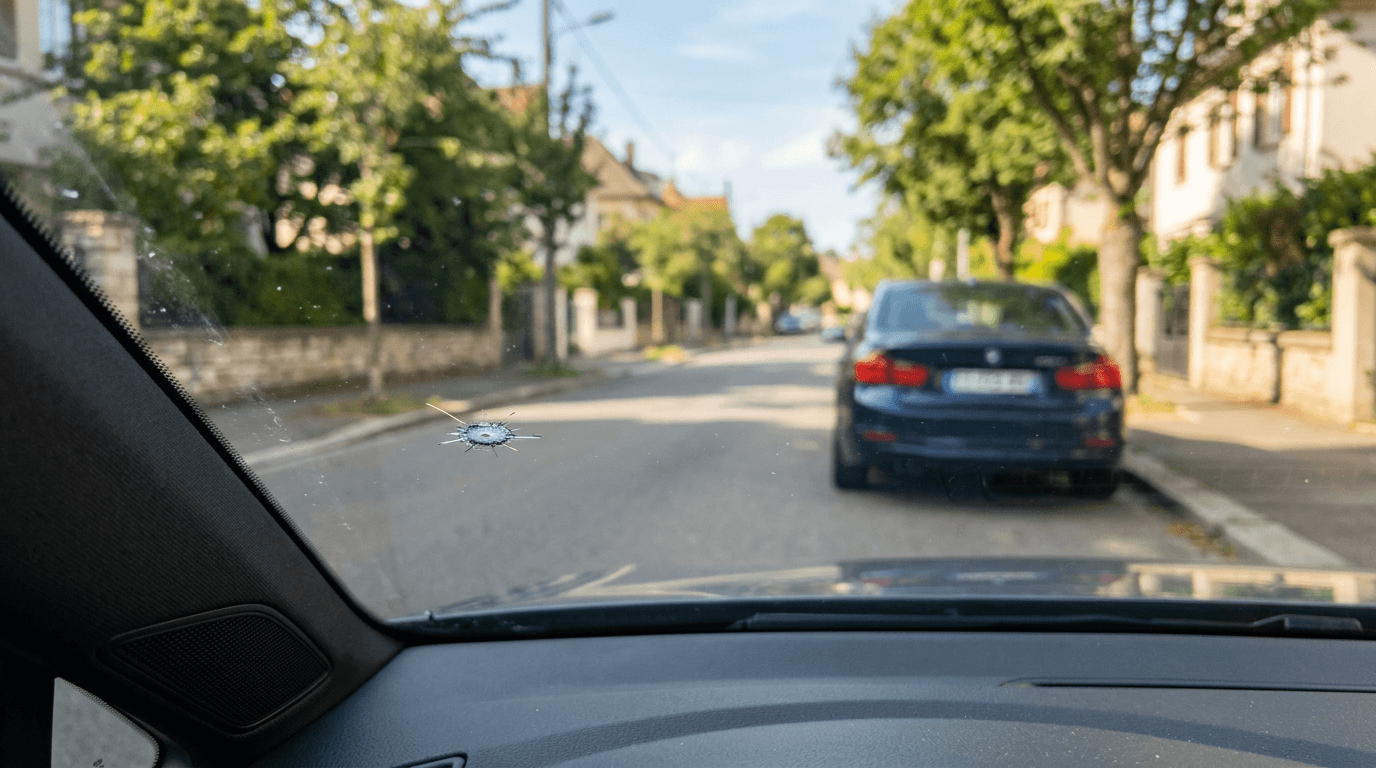
This is the most frequent trap for francophones discovering the Israeli market. Glass breakage is not systematically included in a basic mekif policy in Israel: it is very often an extension to be taken out separately, offered either as part of the mekif contract or on top of a third-party policy. Without this extension, replacing a windscreen cracked by a gravel or stone impact remains at the vehicle owner's expense.
When this extension exists, it often works according to precise rules that are better known before you need them: the repair or replacement must generally go through a network of providers approved by the insurer, and work done elsewhere may not be reimbursed. Some insurers offer this extension "with no excess", which makes it a selling point, but that does not mean it is automatically included in the base price of the contract: you need to check the general conditions line by line, or better, ask your contact directly before signing.
How to check what your contract really covers
The word "mekif" is reassuring, but it does not guarantee identical cover from one insurer to another. Before signing, here are the points to have spelled out in black and white:
These questions seem technical, but they make a real difference on the day an incident occurs. A cheaper contract at the time of signing can turn out to cost much more if theft or glass breakage is only partly covered, or not at all.
What to do in practice in case of theft or glass breakage
In case of theft, the first step is almost always to file a complaint with the police, a document your insurer will systematically ask for to open the claim. Keep the complaint number and inform your insurer or broker as soon as possible: some contracts set short deadlines for reporting, and a delay can complicate the handling of the claim, even when the cover applies on the merits.
For glass breakage, the process is simpler but just as important to follow properly: take photos of the impact or the crack as soon as you notice it, check in your general conditions whether a network of providers is imposed, and contact your insurer before having the vehicle repaired elsewhere. It is often this reflex, simple but easy to forget under the pressure of daily life, that makes the difference between a repair that is covered and a bill entirely at your expense.
A point of caution not to be overlooked
No general rule replaces a careful reading of your policy and its appendices, or the advice of a professional who knows your profile and your vehicle. Depending on the car model, where you live or your history in Israel, two contracts bearing the same word "mekif" can offer very different cover for theft and glass breakage.
To understand the broad outline of how car insurance works in Israel, you can consult our car insurance page. And if you want to check precisely what your current contract, or the one you are offered, does or does not cover, do not hesitate to contact us via our contact page: we can go over the conditions with you before you sign.
Frequently asked questions
Related to this article and our services.