Private health insurance in Israel: don't wait to take it out
Private health insurance is the key to Israel's parallel private healthcare system. Why olim should not wait, and what to check when choosing a broker.
Olim from France, it must be said, find it hard to understand the Israeli healthcare system which, as I say every time, sits halfway between the French system and the American one.
In the American system almost everything is private, and those who have no health insurance, private of course, are truly to be pitied. As for the others, they are to be pitied too, because it is not unusual for doctors to send their patients for a whole series of tests, often unnecessary, just to profit from them, notably by collecting a fee for every consultation before and after the patient is examined. It is also interesting to note that, besides the difficulty of obtaining the famous "Green card" that allows you to work in the United States, one of the reasons often given by French-speaking olim who spent time in the US when asked why they finally left American soil is that the healthcare system is a genuine obstacle course where every step costs the patient an exorbitant amount, which can lead to staggering bills, even for those who are insured...
In the French system there is of course the sécurité sociale, which gives access to public healthcare, and on the private side it is possible to consult privately, and even to have surgery, but only in clinics, which are generally much less well equipped than hospitals. The mutuelle (top-up insurance) then takes over to reimburse the difference in fees between private and public care, and also to reimburse dental care and glasses.
In Israel, the system is a clever mix of the two and so, in most cases, allows the patient optimal follow-up, provided of course, as you will have understood, that you have taken out PRIVATE health insurance.
It is not unusual for French olim to phone me for more information about the PRIVATE Israeli health system and very quickly they ask me, "but does this insurance reimburse dental care or glasses?" That is when I realise the gap that separates them from the Israeli system, and that they do not grasp at all the very essence of this PRIVATE health insurance. No, it does not reimburse glasses or dental costs, but it is light-years away from such simple care because in reality it is THE key that opens the door to a completely different galaxy, that of the PRIVATE Israeli healthcare system, which is a true parallel health system and which is there to make up for all the shortcomings of the public system, which finds it harder and harder to be satisfactory, notably because of rising life expectancy and the many treatments and costs that come with it...
As you know, life expectancy has made a considerable leap over the last 100 years.
The first improvement came when doctors understood that they had to wash their hands to avoid passing infection from one patient to another. This simple gesture marked a considerable change. It is in the same spirit that, even today, a major awareness campaign has just begun on Israeli television channels about the absolute need to disinfect your hands in hospital, the main source of infection, which according to a 2012 estimate repeated by the State Comptroller causes between 4,000 and 6,000 deaths a year in Israeli hospitals.
The second stage of this evolution began with the discovery of penicillin which, again, saved many lives and contributed greatly to longer life expectancy. In its wake, the many vaccines that have appeared since have led to the near disappearance of several scourges that killed tens of thousands of people over the centuries, such as smallpox, plague, cholera, polio or rabies, all of which, thank God, belong to a bygone era.
The third major stage was the arrival of medical imaging, whether X-rays, scanners or MRIs, which make it possible to diagnose, screen for or monitor a condition without having to put patients under the scalpel to find out exactly what they are suffering from.
The fourth stage saw the birth of many chemical treatments, in particular for high blood pressure, cholesterol and diabetes, which in turn contributed greatly to longer life expectancy.
The fifth stage, we are living through right now.
Innovative cancer treatments based, among other things, on immunotherapy, which lead some specialists to say that within a decade this disease will be classed in the same category as those mentioned in the previous paragraph, such as cholesterol or diabetes, are today's revolution...
For example, leukaemia, which only three years ago left little hope of recovery, is now treated with immunotherapy, which relies on a genetic process that first identifies the cancer cells and then has the patient's own white blood cells attack them, after which the healthy cells are reinjected.
Another example: it is now possible for some diabetes to be treated with tablets taken daily rather than insulin injections that affect quality of life. However, these tablets are still not covered by the Ministry of Health and cost around 10,000 shekels a month.
As you can imagine, it is not only therapeutic treatments that benefit from the unprecedented innovations of present-day medicine, but also screening techniques. Today, through a blood test, medicine is able to tell whether a patient has colon cancer, without even needing a colonoscopy, although this remains necessary to detect the very beginning of a tumour or polyps.
But here it is: to benefit from these innovative treatments, you still need to have taken out PRIVATE health insurance, because the gap between the appearance of the various treatments and technologies on the market and their coverage by the Israeli Ministry of Health through the famous "health basket" (the list of subsidised medicines) ranges from 3 to 7 years, and what is more, their cost is particularly high...
The cost of immunotherapy treatments ranges between 80,000 and 90,000 shekels a month.
But even without needing such treatments, going without private health insurance in Israel can also be a worry.
For example, when a pregnant woman has contractions well before term and absolutely must have monitoring, she has no choice but to go to hospital, which is not always necessary and even less desirable, or else wait several days for an appointment at the Koupath 'Holim (health fund) she belongs to. This delay is not without consequences when you know there may be care to give, notably to the foetus.
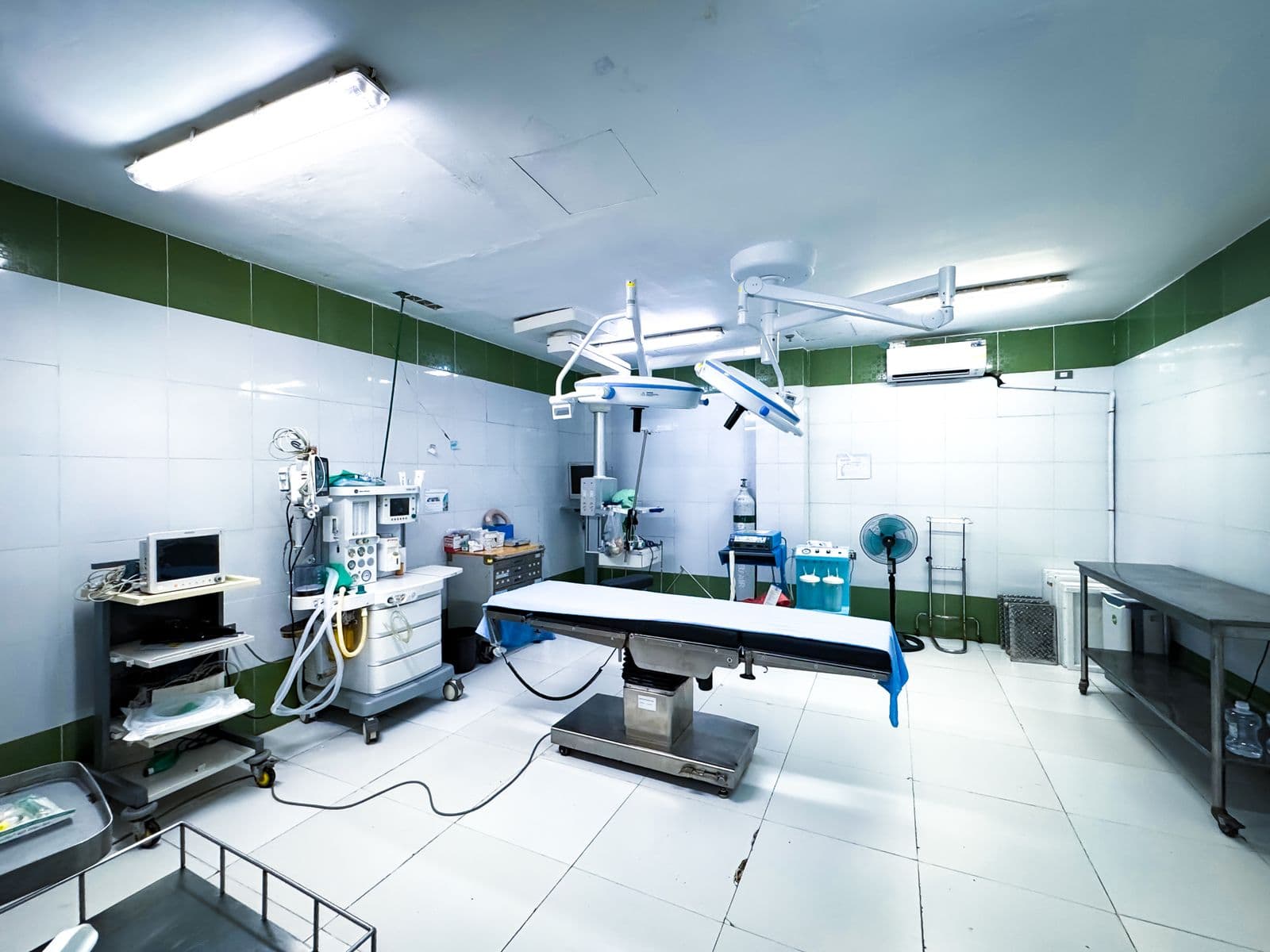
Or again, why wait months for an orthopaedic operation, waiting times announced by the Ministry of Health itself in May 2018, when within a week a patient can have the operation done by one of the best surgeons in the country and get their quality of life back instead of suffering for long weeks?
Likewise, a woman who needs a surgical operation does not want to wait several weeks either, nor to be unsure of being operated on by the doctor of her choice.
Two more important points to remember:
In the Newsweek ranking of the world's best hospitals 2026, only one Israeli hospital is in the top ten: the Sheba Medical Center (7th)...
Of the 5,000 surgeons practising in Israel, only 2,200 work with the Koupoth 'Holim (all funds combined) and the rest work only privately, including the best...
The overwhelming majority of native-born
Israelis take out PRIVATE health insurance because of their long experience of the limits of the Israeli public health system, either because they have experienced them themselves, or because they have seen their relatives suffer. This is the case, among others, of the very famous Israeli weather presenter Dany Roop, who even went so far as to write a book telling of the ordeals his father suffered at the hands of a public health system which, in his father's case, proved particularly inadequate and in the end fatal...
French-speaking olim, for their part, as I said above, find it hard to understand the VITAL need to take out health insurance here in Israel, or, when they do understand it, it is only after a condition has already appeared in them or in someone close to them. In that case, of course, they will not be able to be insured for everything and will have to accept the admission conditions that the insurance companies make them sign.
In other cases, after asking several brokers for quotes, they cannot tell the difference between the benefits insured by one or the other, and most often to their disadvantage. To make a genuine comparison, you must first be sure you are comparing the same things...
As I say every time someone calls me to take out this kind of insurance, I always explain that they must FIRST make sure they are dealing with a real broker, who themself holds a LIFE INSURANCE licence (that is what the field of health insurance is called in Israel) issued by the Israeli Ministry of Finance, and not just a car or home insurance licence. Then it is also very important to check that this same broker works with all the companies and not just one or two, because in that case it means that their financial interests, through larger commissions, take precedence over the real interest of the insured person. A real broker will first and foremost care about the interest of the people they insure, and in many cases it is even preferable to insure the adults with one company and the children with another, because of differences in benefits.
But above all, do not wait for something to happen before taking out PRIVATE health insurance. Get ahead of it, UPSTREAM, especially since for a child under 18 the cost remains very low (ask for an up-to-date quote)!
As for my husband and myself, we keep firmly in mind that in this profession we are dealing first of all with Dinei Nefashot, as it is written in the Talmud, that is to say that our priority is to protect the people we insure against any turn of events, and in particular as regards health.
With more than 25 years of experience in insurance, my husband is recognised for his professionalism and seriousness, and we will know how to advise you in your best interests.
For any further information, please contact me directly on 054 307 0916 or by filling in the form below.
Frequently asked questions
Related to this article and our services.