Jewellery at home in Israel: the limits of insurance
Jewellery and valuables at home: why standard home insurance in Israel covers them poorly, and how to strengthen your protection.
A standard home insurance policy in Israel almost never covers the full value of your jewellery and valuables: the standard policy generally applies an overall ceiling, calculated on the sum insured for contents, as well as an even lower limit per item. Beyond these ceilings, additional cover is often necessary.
For many households, this limit goes unnoticed until the day of a claim, when they discover that the compensation offered is far below the real value of the jewellery lost, stolen or damaged.
What a standard tikhoula policy covers
The tikhoula (home contents insurance) generally includes cover for jewellery and valuables in the event of theft, fire, water damage or other events covered by the policy, as long as these items were in the home at the time of the claim. It is a useful cover, but it remains, by design, capped.
These ceilings generally take two forms: a maximum percentage of the total sum insured for contents, reserved for jewellery and valuables taken as a whole, and an even more restrictive limit applied to each item taken individually. In other words, even if your overall tikhoula sum insured seems comfortable, the share actually available for your jewellery may be much lower, and a particularly valuable piece of jewellery may on its own exceed the per-item ceiling.
A standard home insurance policy in Israel almost never covers the full value of your jewellery: beyond a certain ceiling, additional cover becomes necessary.
Why jewellery is a particular problem
Jewellery combines several difficulties from an insurance point of view: its value can be high relative to the space it takes up, it is easy to carry off in a burglary, and its real value, notably for inherited, antique or designer pieces, is often hard to establish without a valuation. This is partly why insurers limit their exposure on this type of item in a standard policy.
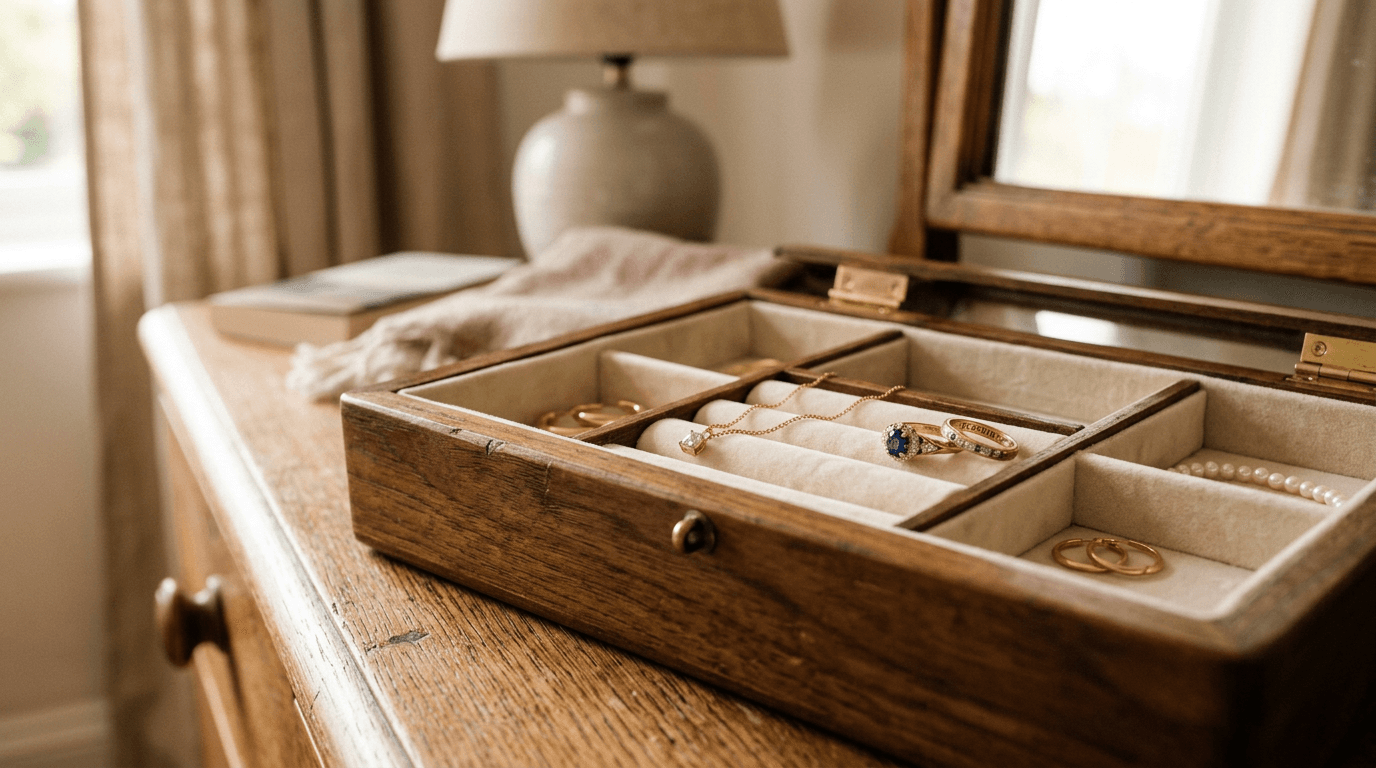
An engagement ring, family jewels handed down over several generations, or a collection built up over the years can therefore be worth far more than your contents policy automatically covers, without you always being aware of it before a claim.
Other valuables subject to the same limits
Jewellery is not the only item affected by this kind of capping. Valuable watches, high-end cameras, musical instruments, works of art or collectors' items are often treated in a comparable way in a standard tikhoula policy: cover exists, but it remains limited compared with the real value of these items, especially when they are gathered in one household.
For a francophone settling in Israel with valuables brought from France, this question deserves particular attention when taking out cover, rather than simply renewing cover designed for a standard home.
How to top up your cover
Several solutions exist to go beyond the standard ceilings. The most common is the endorsement or extension for jewellery and valuables, which increases the amount covered for this category of items, sometimes with a named list of the most valuable objects. This option generally requires a valuation or a recent purchase invoice to establish the insured value.
For jewellery of particularly high value, some insurers offer dedicated all-risks cover for valuables, which can also follow the jewellery outside the home, for example when it is worn outside or taken on a trip, something a standard tikhoula does not in principle cover. Storage in a safe, at home or in a bank, may also be a condition set by the insurer to maintain or increase cover. Our page on home insurance in Israel sets out the main options for strengthening cover that are available.
Excess and ceiling: two notions not to be confused
When a claim occurs, two mechanisms combine: the excess, that is the share of the damage that remains at your expense, and the cover ceiling, which limits the maximum amount the insurer will pay for this category of items. For jewellery, the ceiling often plays a more decisive role than the excess, because it sets the limit beyond which you will not be compensated anyway, whatever the real value of the lost item.
It is therefore generally useful to compare the jewellery-specific ceiling in your policy with the total value of what you actually own, rather than relying on the overall amount of your tikhoula sum insured alone.
Good habits to protect your valuables
Before any claim, it is useful to build a file for each important piece of jewellery: a recent photo, an invoice or certificate of authenticity, and if possible a dated valuation. This file makes compensation much easier the day it is needed, and avoids arguments about the real value of the lost item.
It is also recommended to update your policy after a major purchase, an inheritance or a valuable gift: a late declaration, or no declaration at all, can limit, or even cancel, compensation in the event of a claim.
As with any home insurance question in Israel, each household's situation is different depending on the total value of the items held, how they are kept and the type of policy already taken out. Talk to us to assess whether your current cover really matches the value of your jewellery and valuables.
Frequently asked questions
Related to this article and our services.